
Optical illusions, a confession, and the story behind the story
“Ma’am, you are such an outspoken person, so committed to social justice – what did you do against Apartheid when you were a young girl?”
Tshepang Khunou punched me in the stomach with that question. A knock-out in five seconds. My intestines twisted and turned because I did not know what to say.
It was 2013, and we were at the ATKV Redenaars competition – an Afrikaans oratory competition – in Centurion, surrounded by Afrikaans people, and suddenly I was burning with shame for dragging this Grade 11 boy there to speak in his fifth or sixth tongue. But behind the shame was something older. My dreaded, buried white guilt – the one I have mentioned before.
I turned to him, cheeks red, and confessed: “Nothing. I did nothing.”
Tshepang’s question still haunts me. There is, of course, a plethora of reasons why I did nothing, but at the root of this festering silence – this erfsonde, this inherited sin – lies unknowing: the innocent kind and the manufactured kind.
I didn’t know. And now, years later, I wonder: did I just not care? Was I too comfortable to notice the terrible injustice right in front of my eyes? Did I not see how the woman who worked in our home worked twelve-hour shifts and drank her coffee and ate her food from tin cups and tin plates? Did I not see how black people walked into a different door at the café around the corner from the one I used?
I do remember some things. I remember how my father stopped more than once, late at night, when people were being interrogated by police and made to show their “Reference Book” or “Pass” or what the Afrikaners called them – a “Dompas”. My father, a reverend, would say: “Don’t worry, sir, this gentleman works for me.” He saved those men from a night in jail. I remember people knocking on our door for food, and how I – four years old – demanded that they sleep over at our house. Something in me was stirred, even then.
But why didn’t I say something? Why didn’t I stand up? Why didn’t I do something?
I’m sorry, Tshepang. I’m sorry I didn’t stand up. I’m sorry I didn’t ask more, look harder, find out what was happening around me. Yes, partly it was ignorance – but I also didn’t know because growing up in the old regime, in a Dutch Reformed parsonage, meant that a great deal was hidden from you. Through the history books. Through the church. Through your community and your school. The unknowing was manufactured for me, and I accepted it, because it was comfortable to accept.
I was living inside an optical illusion. And the thing about optical illusions is that you don’t know you’re inside one. Everything looks true.
The story behind the story
Last week, in Mozambique, I caught myself inside another one.
We had a glorious time. At the beginning I romanticised it all – the beautiful, unspoiled beaches, the coconut palms, the delicious cheap piri-piri chicken and prawns. Driving through Mozambique felt like moving through a secluded world, away from war and fights and news, because we had no airtime. The small buildings and round traditional huts scattered across the rugged landscape felt like home again, and I was overwhelmed by the beauty of it all. I needed to reconnect with the African soil, with Africa itself and I did, but something else happened to me there.
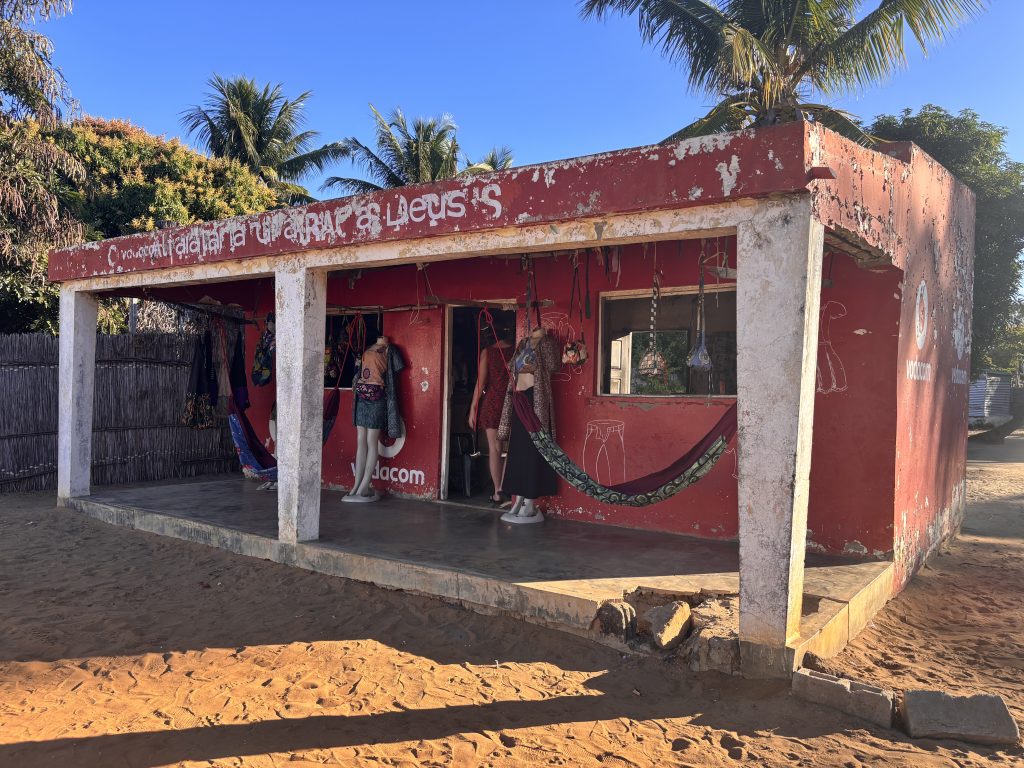
I took a million photos. The silver and bright blue shacks, made from corrugated galvanised metal sheets, shimmered in the late afternoon sun. Photogenic. Picturesque.
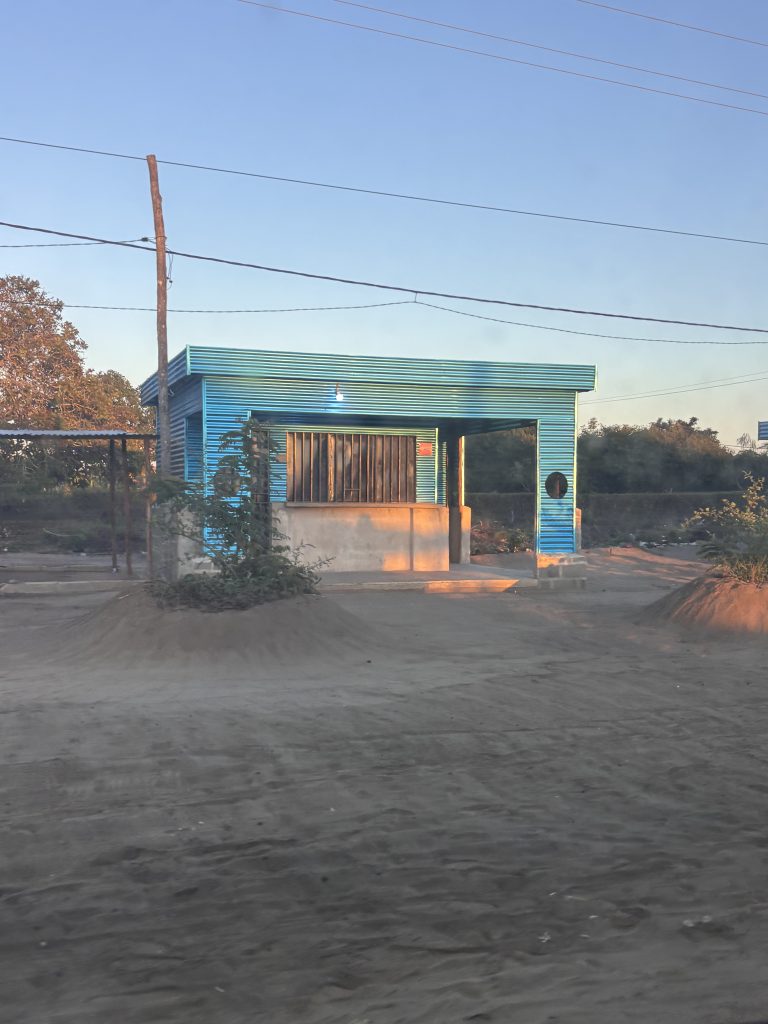
And then, photo after photo revealed the story behind the story – the multilayered, multifaceted dimensions behind the beauty and the esoteric trance I was in. Africa and its reality broke itself open to me, and I recognised the optical illusion and the lie I was telling myself. Again.
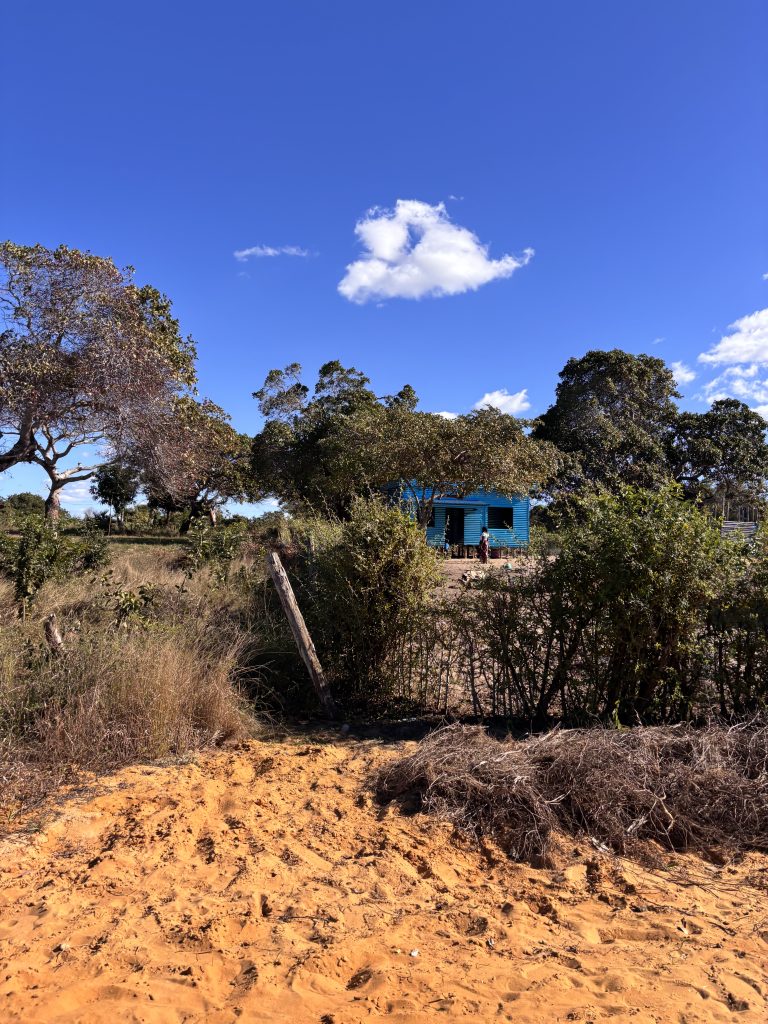
Because behind the beaches and the palm trees and the prawns is this:
Mozambique is classified by the United Nations as one of the Least Developed Countries in the world – sitting between 174th and 183rd out of 193 countries on the Human Development Index. Roughly 75% of Mozambicans live below the poverty line.
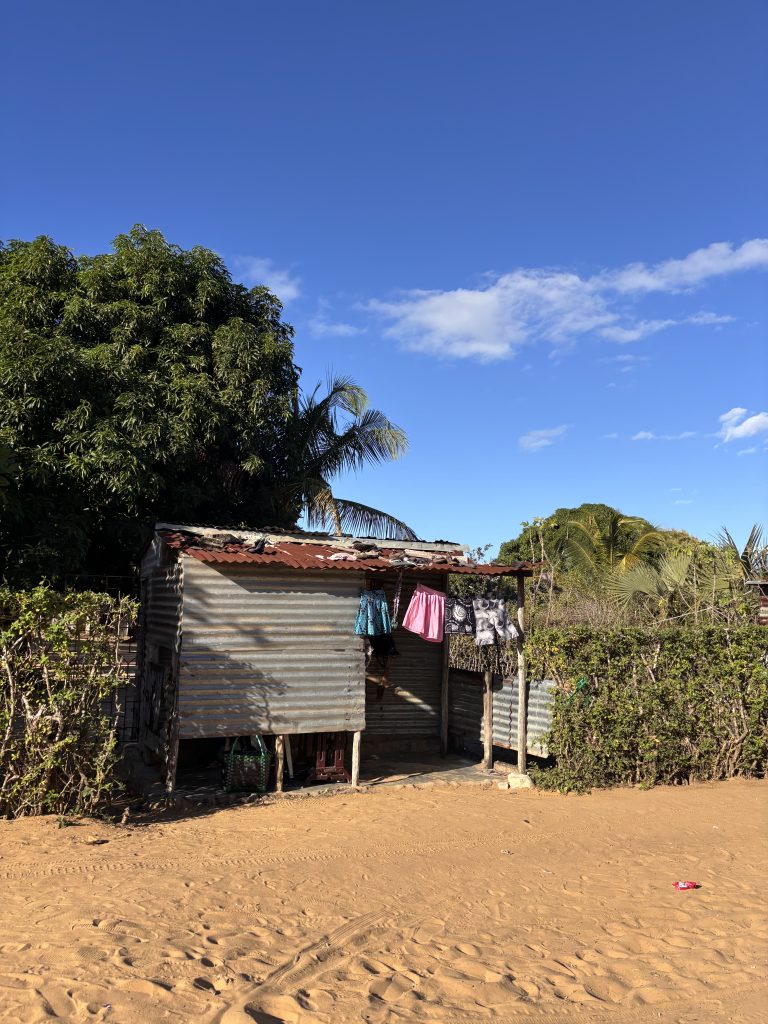
Children are, on paper, expected to receive almost eleven years of schooling. The average adult has completed fewer than four. And here is the detail that stopped me completely: all schooling happens in Portuguese – the home language of only about 6% of the population. Imagine learning to read, to count, to dream, in a language that is not spoken at your mother’s table.
For a population of some 36 million people, there are fewer than 400 mental health professionals in the entire country.
And yet – and this is the part that humbles me – in a 2025 global study of mental wellbeing, young Mozambicans between 18 and 34 ranked 12th out of 84 countries. Their strength is carried by spirituality, by community, by ways of holding each other that no clinic taught them. The resilience is already there. What is missing is not spirit. What is missing is access.
We South Africans romanticise Mozambique as a tropical holiday destination with gorgeous beaches. We never report the rest. We photograph the shimmer and crop out the story.
I know that crop. I grew up inside it.
Guilt that stays guilt
In 2016, at St Stithians, I met Antoinette Sithole. On 16 June 1976, she ran next to Mbuyisa Makhubu as he carried her mortally wounded brother – Hector Pieterson – through the streets of Soweto. You know the photograph. The whole world knows the photograph.
I asked her what I should do with my white guilt.
She told me, in essence, that white guilt means nothing if it just stays guilt. It needs action. And though you are just one person, you are one person who can do something – who can stand up against any form of discrimination. One is better than nothing.
One is better than nothing.
That is why I feel so committed now – so inspired – to help people find direction, purpose, and the courage to pursue it. It is why my daughter and I started CreatU, devoted to quality career guidance and life development for young people and adults searching for their path. And it is why, with three like-minded people – two mental health professionals and a pastoral leader – we founded Aligned, a non-profit resting on three pillars: life skills, mental health skills, and career development – so that access to these reaches ALL children in South Africa and the wider Southern Africa.
I know I am just one person. But I am one person supported by a number of like-minded people, and together we might make a difference.
I cannot answer Tshepang’s question differently. I did nothing, then. But the question was never really about then. It was about now. About learning to see past the shimmer – in a country, in a photograph, in myself – to the story behind the story.
This time, I intend to do something.
Enjoyed this? Subscribe to get new Insights from Dr Cecilia.
Get in touch: